
FAQ article · Compliance & Setup · Public knowledge base
What Is 10DLC and Why Does It Matter?
10DLC is the U.S. registration framework for application-to-person (A2P) text messaging over 10-digit long-code numbers. Political campaigns that send SMS on local-looking numbers generally need to register who is sending and what they are sending. Unregistered or mis-registered political traffic is more likely to be filtered.
7 min read · Published September 6, 2026 · Updated September 11, 2026

Quick answer
10DLC is the U.S. registration framework for application-to-person (A2P) text messaging over 10-digit long-code numbers. Political campaigns that send SMS on local-looking numbers generally need to register who is sending and what they are sending. Unregistered or mis-registered political traffic is more likely to be filtered.
In this article
- 1. What Is 10DLC?
- 2. Why Does It Matter?
- 3. How Does 10DLC Work for Political Campaigns?
- 4. Do We Need a CV Token for 10DLC?
- 5. Is P2P a Way Around 10DLC?
- 6. What Does FreeMessaging.ai Charge for 10DLC?
- 7. How Long Does 10DLC Take?
- 8. What Does the Campaign Need to Provide?
- 9. What This Means for Your Campaign
What Is 10DLC?
10DLC stands for 10-digit long code. It is the carrier framework for A2P messaging sent from ordinary 10-digit phone numbers rather than a short code or a personal one-to-one text.
In the United States, The Campaign Registry (TCR), working with wireless carriers, registers the brand — who is sending — and the campaign use case — what is being sent. Messaging numbers are then associated with an approved campaign.
10DLC is not a phone number you buy in isolation, and it is not permission to text any person. It is the registration path that lets carriers identify political A2P traffic on 10-digit routes.
Why Does It Matter?
Carriers use 10DLC registration to identify political messaging traffic. Without a valid registration path, high-volume political SMS is more likely to be delayed, filtered, or blocked.
10DLC also sits on the campaign calendar. Twilio currently warns that new A2P 10DLC campaign submissions are undergoing manual review and can take about 10–15 days. Twilio may request additional information, and some cases can take longer depending on the sender, use case, vetting, or carrier review.
Live sending cannot begin until required messaging registrations and launch checks are complete. That is why FreeMessaging.ai places 10DLC near the beginning of onboarding rather than waiting until scripts are finished.
How Does 10DLC Work for Political Campaigns?
A typical political 10DLC path has three objects, in order. Mixing that order — for example associating numbers or sending a “small test” while the use case is still pending — is unvetted political traffic.
- Brand — the legal sender: committee name, EIN, address, and website, matching the public filing used for Campaign Verify.
- Campaign use case — sample messages, opt-in description, STOP and HELP language, privacy URL, support contact, and expected volume.
- Numbers — the 10-digit codes attached only after the campaign use case is approved.
Do We Need a CV Token for 10DLC?
For many U.S. 527 tax-exempt political organizations using political 10DLC, yes. A Campaign Verify Authorization Token is used to connect the verified committee to the political messaging registration path.
The token is not a phone number, a messaging account, or permission to text any person. It is one part of the carrier and provider registration process. FreeMessaging.ai handles the CV Token during Step 2 of onboarding, then uses it in Step 3 for 10DLC and Twilio registration.
Not every organization that communicates about politics is a 527 political organization. Other entity types can have different registration rules. FreeMessaging.ai determines the correct path before creating duplicate registrations.
Is P2P a Way Around 10DLC?
No. A campaign should not use the label “P2P” or “A2P” as a substitute for determining the compliance obligations of the program.
For A2P 10DLC political messaging in the United States, onboarding may include Campaign Verify / CV Token, Brand and Campaign registration, phone-number setup, opt-out and suppression handling, and other provider or carrier requirements. Conversational or peer-to-peer style texting is still registered A2P when it runs on 10-digit numbers as a political program.
P2P-style platforms may have their own registration, consent, identification, throughput, and operational requirements. The exact setup should be confirmed for the messaging provider being used.
What Does FreeMessaging.ai Charge for 10DLC?
FreeMessaging.ai charges $0 platform fee and $0 managed-sending fee. The 10DLC registration workflow is included infrastructure — not a paid add-on. FreeMessaging.ai does not skip The Campaign Registry.
Campaigns still pay disclosed direct third-party costs when they apply, including Twilio messaging and phone-number costs and applicable Campaign Verify, 10DLC, or other required registration charges. FreeMessaging.ai does not add a software markup to those costs.
How Long Does 10DLC Take?
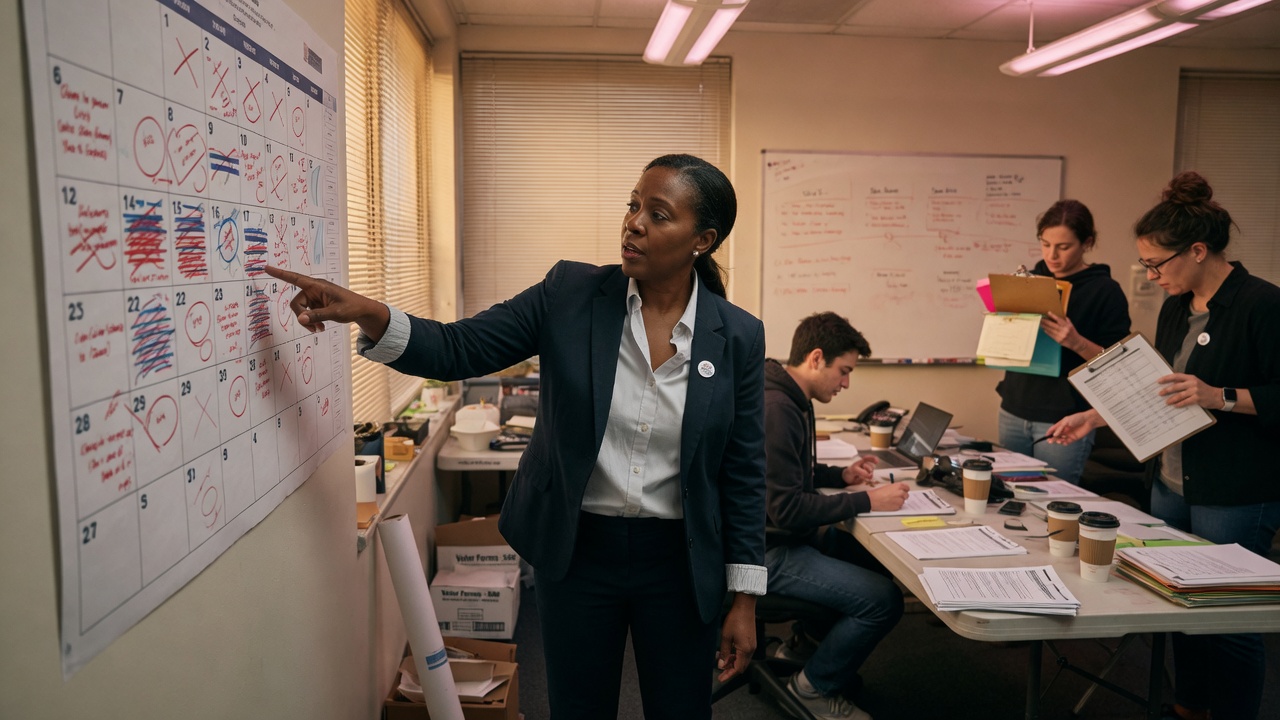
Twilio currently warns that new A2P 10DLC campaign submissions are undergoing manual review and can take about 10–15 days. Some cases take longer depending on the sender, use case, vetting, or carrier review.
FreeMessaging.ai does not wait for every external approval before continuing the rest of the preparation. Contact data, voter CRM, candidate knowledge, and message design can often proceed while 10DLC review is pending. Live sending still waits on required registrations and launch checks.
Because this external approval is often the longest single dependency, FreeMessaging.ai recommends starting registration as early as possible rather than waiting until messaging content is completely finished.
What Does the Campaign Need to Provide?
The exact checklist depends on the committee type and current carrier/provider rules, but onboarding generally requires accurate sender information and an authorized campaign contact. This page is not legal advice. Carrier and registry rules change; confirm current requirements during onboarding.
- Exact legal committee information shown on the current FEC or state/local filing
- Current campaign website and authorized contact information
- Sample message content and use-case description
- Opt-out language (STOP) and support practices (HELP)
- Expected volume and campaign timing
- An internal owner for compliance questions
What This Means for Your Campaign
If your campaign plans to text voters on 10-digit numbers, treat 10DLC as a send lock, not optional paperwork. Start Campaign Verify and 10DLC registration early, keep preparing data and knowledge in parallel, and do not assume instant blast capacity the week before Election Day.
The best next step is to begin onboarding and let FreeMessaging.ai determine which registrations are already complete, which can be reused, and which need to start immediately.