
FAQ article · Getting Started · Public knowledge base
What Is FreeMessaging.ai?
FreeMessaging.ai is a campaign messaging service that helps political campaigns start or expand two-way SMS outreach, manage voter replies, capture campaign data, and continue engagement without adding a platform fee or managed-sending fee.
5 min read · Published September 6, 2026 · Updated September 11, 2026

Quick answer
FreeMessaging.ai helps campaigns reach voters through two-way political text messaging. It combines campaign contact data, voter CRM records, AI-assisted conversation handling, candidate-approved knowledge, follow-up workflows, reporting, and optional WhyIVote voter-facing experiences. Campaigns can use it to start an SMS program or add incremental reach alongside an existing team or texting vendor.
In this article
- 1. What Does FreeMessaging.ai Do?
- 2. Built for Campaigns That Are Starting or Expanding
- 3. Two-Way Messaging, Not Just Outbound Blasts
- 4. How AI Fits In
- 5. How the Voter CRM Fits In
- 6. How Candidate Knowledge and WhyIVote Fit In
- 7. Does FreeMessaging.ai Support P2P and A2P?
- 8. What Does It Cost?
- 9. Is FreeMessaging.ai a Self-Service SaaS Platform?
- 10. How Do We Get Started?
What Does FreeMessaging.ai Do?
FreeMessaging.ai is designed to support the full campaign messaging workflow, not just the act of sending a text message. It helps campaigns organize who they want to reach, send campaign-approved messages, handle replies, capture useful voter signals, and turn those conversations into follow-up actions.
Typical campaign uses include:
- Voter outreach and supporter identification
- Event invitations and reminders
- Volunteer recruitment and follow-up
- Fundraising outreach
- Issue education and candidate introductions
- Early-vote and GOTV messaging
Contact Data → Voter CRM → Messaging Program → SMS Outreach → Two-Way Conversation → Follow-Up → Analysis
Built for Campaigns That Are Starting or Expanding
FreeMessaging.ai is intended for both campaigns that do not yet have an SMS program and campaigns that already have staff, consultants, or another texting vendor.
Start SMS Outreach — Build a campaign texting program when you do not already have one.
Expand Existing SMS Reach — Add incremental texting capacity without replacing the team, vendor, voter file, or operating process that already works.
The goal is to add useful campaign capacity, not force a campaign to rebuild its communications operation around another software product.
Two-Way Messaging, Not Just Outbound Blasts

FreeMessaging.ai is built around conversation. When voters reply, the system can organize the response, identify the type of interest or question, preserve the conversation history, and route the contact into the appropriate follow-up workflow.
Examples of signals that can be captured include:
- Supporter or undecided status
- Volunteer interest
- Event interest
- Donor or fundraising interest
- Issue questions and policy interests
- Follow-up required
- Opt-out or suppression status
How AI Fits In
AI can assist with response classification, common campaign-approved answers, and follow-up routing. The purpose is to help campaigns respond more consistently and reduce the workload created by large numbers of inbound conversations.
AI is grounded in approved campaign information and defined messaging rules. Questions that should not be answered automatically can be escalated for human review.
How the Voter CRM Fits In
Every useful conversation can become campaign data. FreeMessaging.ai can maintain voter and supporter records that include contact history, response classifications, issue interests, supporter status, and follow-up needs.
This allows future outreach to use what the campaign has already learned instead of treating every text conversation as an isolated thread.
How Candidate Knowledge and WhyIVote Fit In
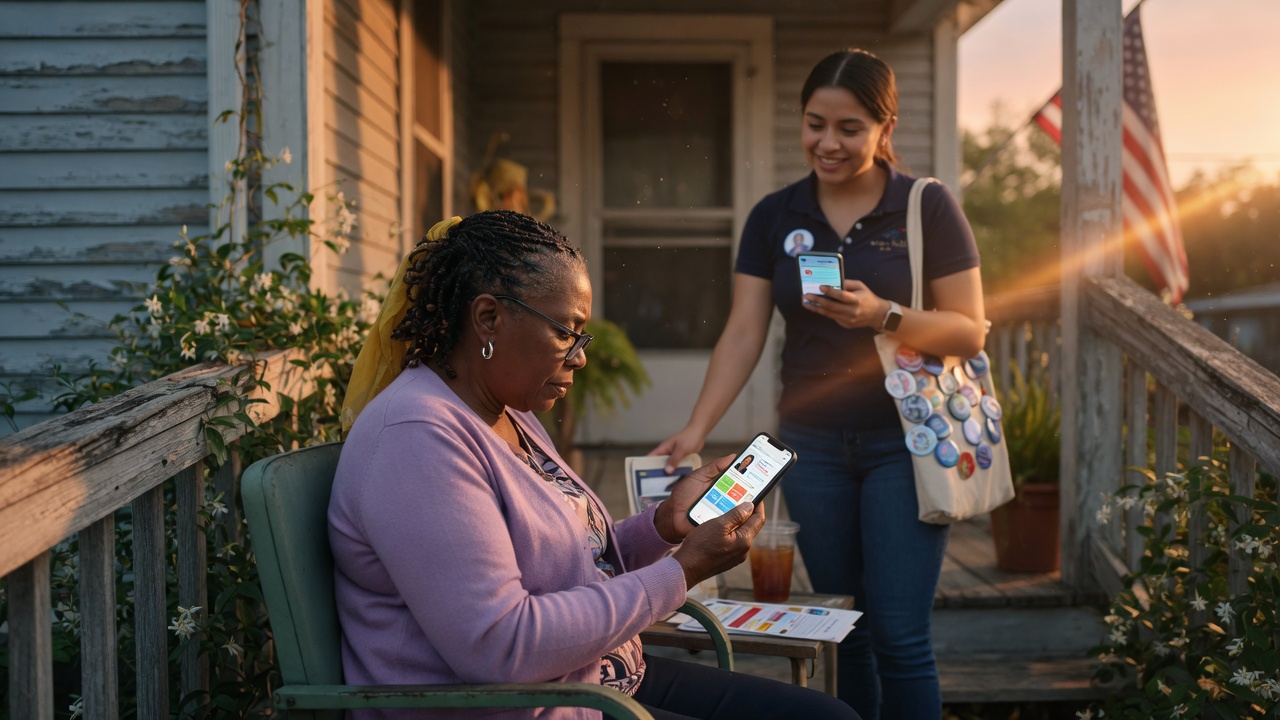
Campaign-approved candidate information can be organized into a Candidate Knowledge Base covering the candidate’s background, policy positions, key issues, FAQs, and approved responses. That knowledge can support SMS conversations and AI-assisted answers.
FreeMessaging.ai can also connect an interested voter to a WhyIVote mobile candidate profile, where the voter can explore the candidate, issues, and approved information in more depth than a single text message can provide.
SMS gets attention. AI helps manage the conversation. WhyIVote provides depth. The Voter CRM captures the signal and follow-up.
Does FreeMessaging.ai Support P2P and A2P?
Yes. FreeMessaging.ai can support both P2P and A2P political texting workflows. The appropriate approach depends on the campaign’s audience, scale, operating model, messaging objective, and applicable registration or compliance requirements.
Campaigns do not need to treat P2P and A2P as mutually exclusive. The messaging program can be designed around the model—or combination of models—that best fits the campaign’s needs.
What Does It Cost?
FreeMessaging.ai charges a $0 platform fee and $0 managed-sending fee for the standard service. Campaigns still pay the disclosed direct costs required to operate the program, such as underlying messaging and phone-number costs, required registration or compliance charges, and any disclosed AI usage costs.
$0 Platform Fee • $0 Managed-Sending Fee • Pay Only Disclosed Direct Costs
Is FreeMessaging.ai a Self-Service SaaS Platform?
No. FreeMessaging.ai is not positioned as a traditional self-service software product where a campaign is simply given an account and left to operate everything on its own.
It is a supported campaign messaging service. FreeMessaging.ai works with the campaign to complete onboarding, configure the messaging workflow, connect relevant data, and prepare the program for launch. Campaigns can use the service without purchasing OCS campaign-execution services.
How Do We Get Started?
Campaign onboarding follows a structured process that can include the service agreement, Campaign Verify / CV Token, 10DLC and Twilio registration, campaign contact data, voter CRM setup, Candidate Knowledge Base, messaging-program design, launch, and analysis.
Some verification and registration steps depend on third parties, so campaigns should begin onboarding early when they are working toward a fixed election or GOTV deadline.
Agreement → Verification → Registration → Data → CRM → Candidate Knowledge → Messaging Design → Launch → Analyze
Still have a question? Contact FreeMessaging.ai support for help with setup, onboarding, messaging, or how the service fits your campaign.